In an FT opinion piece today, Stephen Miran, Trump's former CEA chair and architect of the "Mar-a-Lago Accord" tariff framework, says that the recent noise over bond yields obscures a highly positive growth story. He says that inflation expectations have been highly consistent and in line with the Fed's 2% inflation target, the term premium has barely fluctuated over the past year, and that the recent uptick in yields is based on expected short-term interest rates, which are moving higher in response to higher growth expectations. That's a much more benign conclusion than accelerating inflation or fears of unsustainable fiscal policies. So is he right?
To assess this, look at the components of the yield on a 10-year US Treasury. This is made up of three separate ingredients:
- Expected inflation: If investors think inflation is heading higher, they demand a higher yield to compensate.
- Expected real interest rates: This tends to track expectations about economic growth and central bank policy.
- Term premium: The future is uncertain, and the term premium is the extra compensation investors demand for taking on the risk that loose fiscal or monetary policy now may mean higher interest rates in the future.
The term premium is the messiest of the three and can move for reasons that aren't obviously about growth or inflation, things like:
- The government issuing more debt than expected
- A major buyer (a foreign central bank, for instance) stepping back from the market
- General nervousness about fiscal sustainability
Using data to clarify what's going on
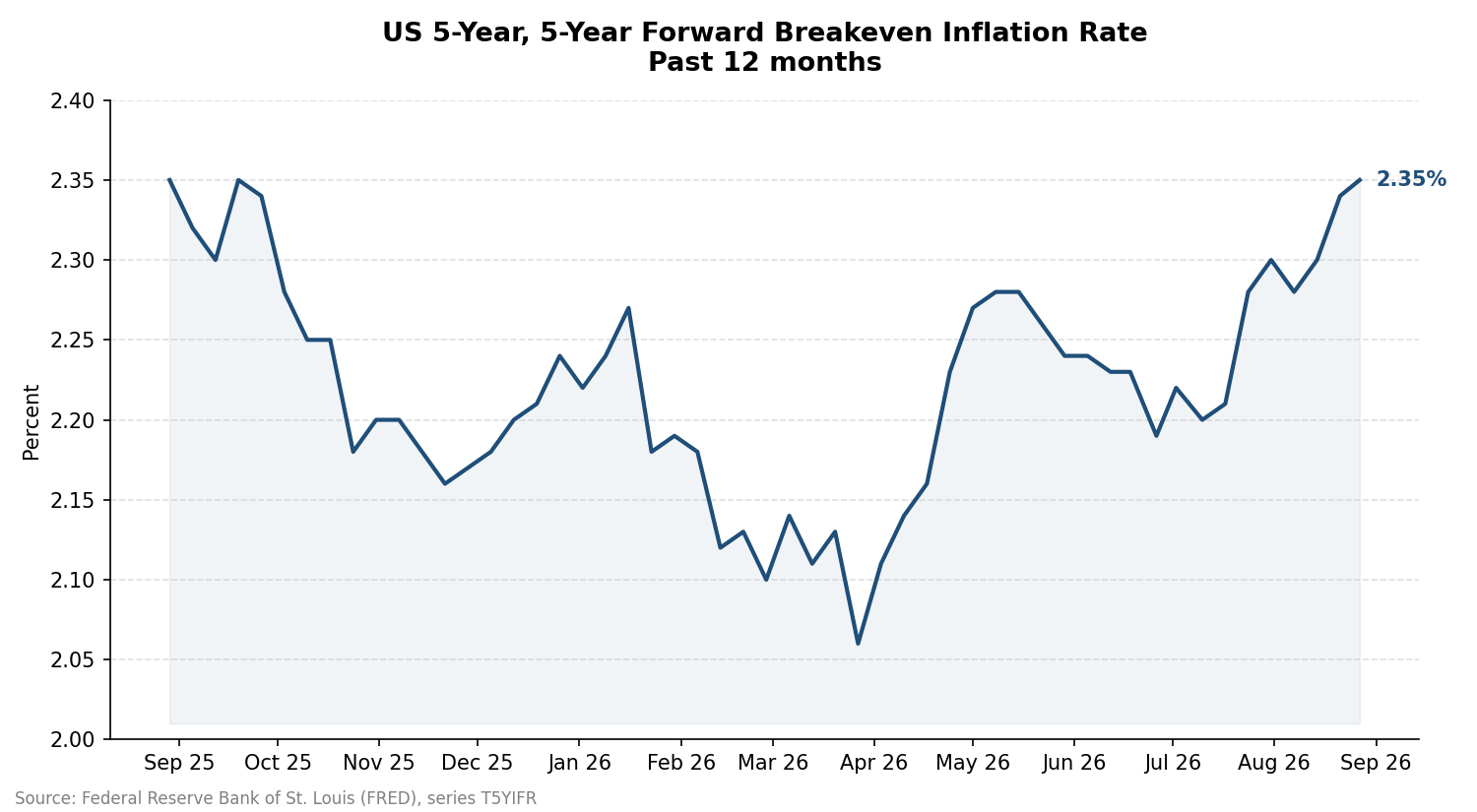
Data from the St Louis Fed shows that inflation expectations have been more volatile than Miran suggests. They have been rising since the outbreak of war between the US and Iran, but are back below where they were a year ago, and broadly in line with the Fed's 2% target.
The St Louis Fed also compiles measures of the ‘term premium’, and this shows a more interesting profile:
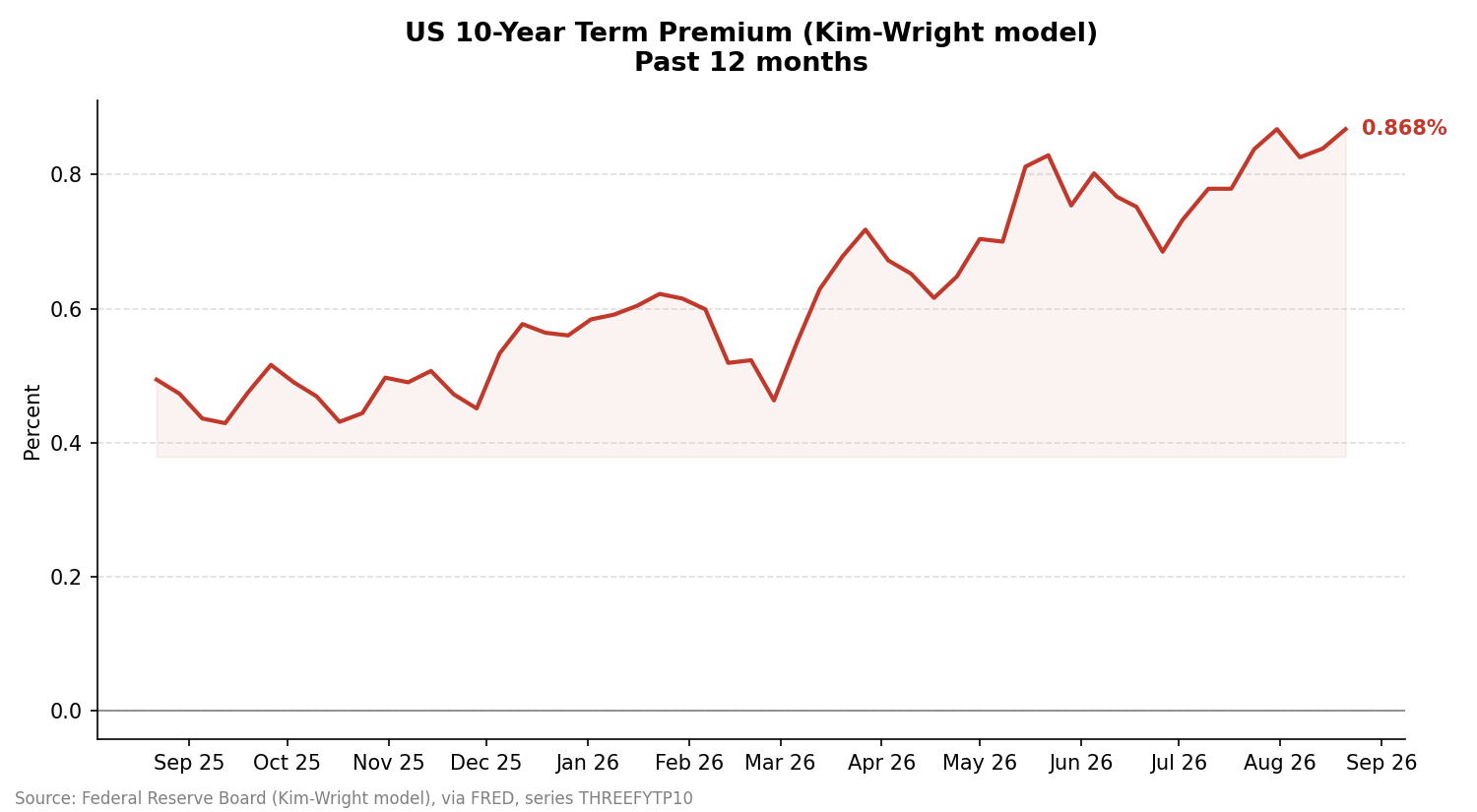
By historical standards, there's been quite a sharp increase in the term premium, which Miran has rather glossed over.
Putting together data on inflation expectations, nominal yields and term premia gives this chart:
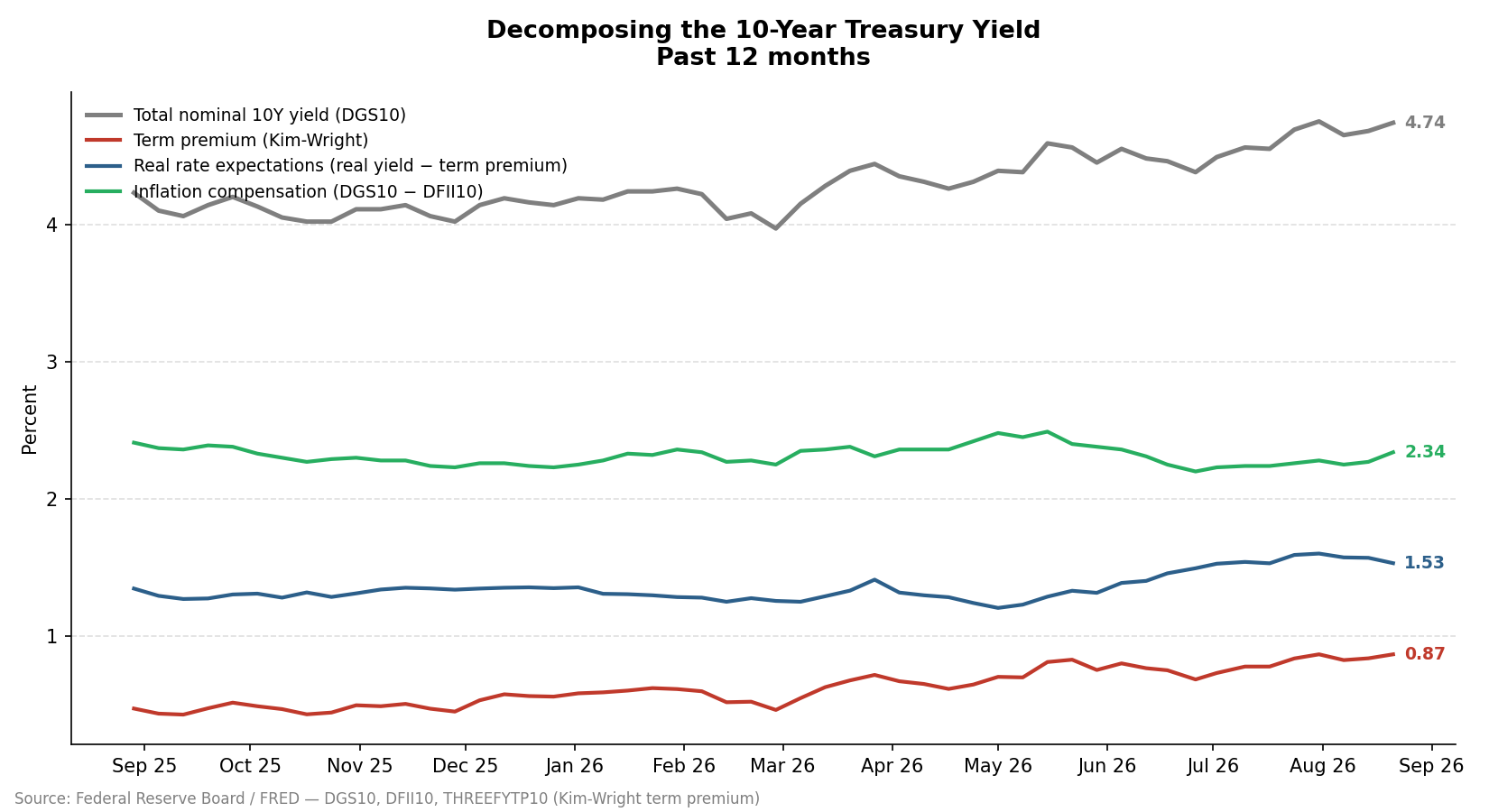
This aggregate picture shows the term premium is the prime factor behind rising yields, with a very modest contribution from higher expected real interest rates. Miran is only partially right, and there are signs that the bond market vigilantes are beginning to worry about US fiscal sustainability.